The flagship programme · 90 days · Self-led, cohort, or 1:1

The directors the UK actually needs.

You have done the hard work. Now the role is asking something different. The Director's Path is the structured programme for senior managers stepping into directorship, built around the human attributes the position genuinely requires.

Six modules. Ten dimensions of director readiness. Five core attributes of executive temperament. One peer cohort of no more than ten. Designed and led by Stephen Marshall VR, with a network of world-class leadership talent built in. The free Readiness Scorecard is where most people start. The 90-minute Readiness Review is where most people decide.

12–16 weeks From £197 self-led Six working tools Cohorts capped at ten

Why this exists

The UK has a director-shaped hole.

Government has just defunded the funding route that built most of our senior leaders. Research shows the gap was already structural. You are the answer the country needs. The Director's Path exists to make sure you are ready.

82%

of UK managers entering management positions have had no formal management or leadership training. They are accidental managers carrying real consequences.

CMI / YouGov, surveying 4,500 managers and workers

23%

productivity uplift in organisations that invest in management capability. Skilled managers are the largest single lever on firm-level performance.

CMI Management and UK 2030 research

£0

of public funding now available for over‑22s on the Senior Leader and Chartered Manager apprenticeships from January 2026. The development route most senior leaders relied on has closed.

Department for Education, May 2025; further defunding March 2026

For nearly a decade, the Senior Leader Apprenticeship and the Chartered Manager standard provided structured leadership development to the people who actually run UK organisations. Around seven thousand new starts a year on the Senior Leader standard alone. Median post-apprenticeship salary: £67,000, more than double the UK median. Eighty-nine per cent of the participants were over twenty-two years old. Forty-eight per cent were the first in their families to attend higher education.

From January 2026 those funding routes are closed. From March 2026 the Chartered Manager and team leader standards are being withdrawn entirely. The government has redirected the budget to younger learners. The intent is reasonable. The consequence is not. The country still needs the directors. The route to becoming one has just been removed.

Meanwhile, the British Chambers of Commerce has called the cuts "counterproductive to growth." The CMI describes the change as failing to address the UK's ongoing skills gap in management capability. This is the moment the gap becomes a market. The Director's Path is the structured response.

If you are reading this, you are part of the answer.

The leaders the UK economy needs over the next decade are not yet sitting in directorships. They are sitting in senior manager roles, doing the work, carrying the consequences, and wondering whether the next step is theirs to take. It is. What they need is a structured programme that produces director-grade capability without depending on funding that no longer exists. The Director's Path was built precisely for this.

Sources: DfE update on Level 7 apprenticeship funding (May 2025); FE Week: Level 7 funding axed from January 2026; FE Week: Chartered Manager among 16 axed standards (March 2026); CMI Management and UK 2030 Report (2024).

Five attributes of executive temperament

What being a director actually means.

Title is the easy part. The harder question is whether you embody the qualities the role genuinely requires when nobody is watching. Five attributes. They reinforce each other. Together they describe the temperament every effective director relies on.

I

Adaptability

The capacity to read changing conditions accurately and respond before the situation becomes a crisis. Most failure at director level is adaptability failure dressed as something else.

II

Clarity

The capacity to see what is actually happening, articulate it precisely, and communicate it to the people who need to act on it. The single largest determinant of whether a strategy survives contact with the organisation.

III

Reliability

Doing what you said you would do. Sounds simple. At director level, where commitments are made under uncertainty and tested over months, reliability is the foundation everything else rests on.

IV

Trustworthiness

Different from reliability. Reliability is the record of what you do. Trustworthiness is the accumulated judgement that means people share with you what they would otherwise withhold. Without it, you operate without information.

V

Good Temperament

The capacity to be the same person under pressure as you are when things are calm. The attribute most leaders assume they have until tested. The one most quickly recognised by everyone around you.

These five are not a checklist. They are a pattern. They reinforce each other under load and erode together when they fail. Develop one in isolation and the others remain exposed. Develop them as the coherent character the role requires, and the role becomes possible.

A note on resilience.

You will notice resilience is not on the list. That is deliberate. Resilience is what you need when adaptability has failed. If you adapt well, the bouncing-back is rarely required. The leadership development industry has spent fifteen years celebrating recovery from situations that better adaptability would have avoided. The Director's Path is preventative by design. We develop the upstream attributes so the downstream ones take care of themselves.

The 10 dimensions of director readiness

How ready looks, measured.

The five attributes describe who a director is. The ten dimensions of director readiness describe what they can do. The free Director Readiness Scorecard measures you against all ten and produces an honest report in under ten minutes.

IStrategic Orientation
IIExecutive Presence
IIICommercial Acumen
IVLeading Leaders
VGovernance & Risk
VIStakeholder Navigation
VIIResilience & Identity
VIIIOrganisational Influence
IXStatutory & Financial Duties
XExit & Succession Readiness
Take the Readiness Scorecard Free. Ten minutes. Honest signal.

The programme

Six modules. Six working tools.

The structured 90-day path from senior manager to director-ready. Each module produces a working document you keep using long after the programme ends. The final module synthesises everything into your own 90-Day Leadership Action Plan.

I

The Direction Problem

You are clear on what you need to do. The harder question is what your leadership is actually in service of at this level. This module surfaces the distinction between task clarity and direction clarity. You produce your Direction Statement: a precise articulation of your leadership purpose, your priorities, and the outcomes you are personally accountable for. Most participants find the writing reveals ambiguity they had not noticed before.

What you produce A completed Direction Statement for your current role.
II

How Directors Decide

Decision-making at director level is not a faster version of what you did as a manager. The stakes are different, the ambiguity is greater, and the cost of a poor decision compounds in ways that operational-level mistakes do not. You build a personal decision framework calibrated to the situations you actually face, not to a textbook taxonomy.

What you produce A Decision Framework mapped to your real decision landscape.
III

Accountability That Holds

Most accountability systems in organisations are built for good conditions. They collapse under pressure. Deadlines slip, ownership blurs, performance conversations get deferred because the situation is complex. You design an accountability architecture that holds under stress, for yourself and the people you lead. Built from your context, not a generic model.

What you produce A personal and team accountability system, tested against your current context.
IV

Senior Communication

How you communicate changes at director level. The precision required, the audiences involved, and the consequences of imprecision are all different. You develop your communication approach for the three critical contexts: communicating upwards to boards and executives, outwards to peers and stakeholders, and under pressure when stakes are high and time is short.

What you produce A Communication Framework and a personal communication audit.
V

Working With Constraints

Directors operate under resource, political, and time constraints simultaneously, often indefinitely. The ability to move forward clearly despite these constraints is the operating environment, not a phase. You develop a disciplined approach to working within constraints without losing direction or momentum.

What you produce A Constraint Management tool calibrated to your organisation and current situation.
VI

The 90-Day Plan

The programme closes with synthesis. The five preceding modules have produced five working documents. Module VI brings them together into a structured 90-day leadership action plan built from your specific gaps, your real context, and the outputs you have generated. This is a working plan with clear actions, owners, timelines, and success measures. Designed to change how you lead in the next quarter, not to sit in a folder as evidence of completion.

What you produce A complete 90-Day Leadership Action Plan.

Who delivers it

Stephen-led. Network-supported.

You work directly with Stephen Marshall VR. He brings with him a curated network of world-class leadership talent who join the cohort sessions when their specific expertise serves the moment.
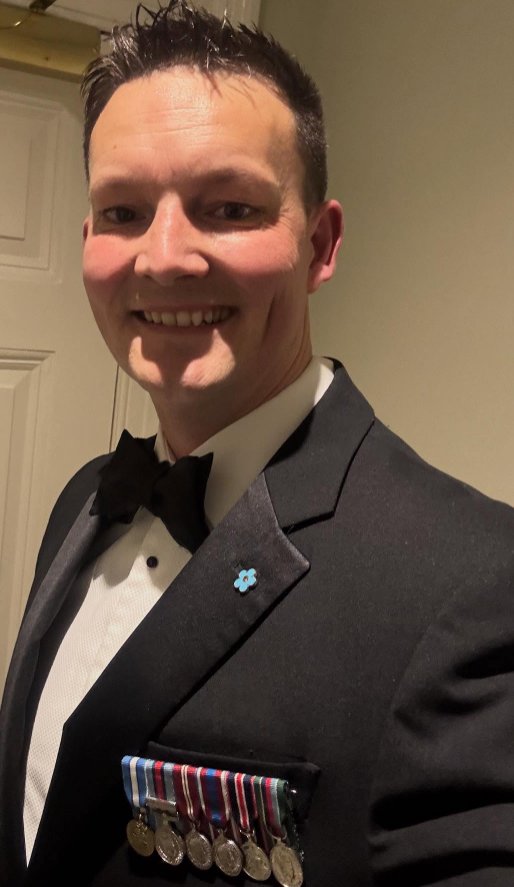
The lead practitioner: Stephen Marshall VR.

Former Gold Commander at the Met Office through COVID. National operational leadership across crisis, defence, and large-scale logistics. Project DEFEND adviser. NATO ENSEC CoE Research and Innovation Lead. One of nine on the Willow Review. MBA, CMgr, FCILT, FCMI.

Stephen designs and delivers the core of every programme directly. The 1:1 Coached format puts him in the room with you for three private 90-minute sessions. He brings no jargon, no inspiration, and no shortcuts. He brings clarity.

The supporting network: Stephen has assembled a small group of senior practitioners from governance, finance, regulatory, and sector-specific leadership who join cohort sessions on invitation. You get specialist input where it serves you, without the overhead of a faceless consultancy roster.

Choose your format

The same rigorous programme. Three levels of support.

Pick a format. Add from a small menu of options. The structure is deliberately simple, adaptable to the way you actually work.

Self-Led

Move at your own pace

£197

One-time payment · Immediate access

For disciplined leaders who need structure more than they need challenge. Complete programme access, all workbooks, full programme journal. Lifetime access.

  • Six structured learning modules
  • All workbooks and frameworks
  • Programme journal
  • Lifetime access
  • Self-paced, no scheduled sessions

Best if you have the discipline to work independently, or you want to test the programme before committing to a guided format.

Start Self-Led

1:1 Coached

Direct work with Stephen

£1,197 / £1,950

Individual / Employer-sponsored · Strictly limited

For leaders who want personalised challenge throughout. Three private 90-minute coaching sessions, a personalised gap analysis, direct email access between sessions.

  • Everything in Cohort-Guided
  • Personalised Readiness Review at outset
  • Three 90-minute private coaching sessions
  • Direct email access between sessions
  • Personalised written feedback on all five frameworks

Best if you have employer support, or you are in a high-stakes transition where personalised challenge matters more than peer dynamic.

Apply for a place

Access principle

Public sector, NHS, registered charities, self-funding individuals, and SMEs under fifty employees automatically qualify for an accessible rate on the Cohort-Guided and 1:1 formats. No application. No proof. Declare on booking. Genuine accessibility is a values-level commitment, not a marketing tactic.

Also available.

A short menu of options. Each one earns its place by solving a specific need.

The Director's Readiness Review

£195

A 90-minute paid diagnostic with Stephen, followed by a two-page written report. You leave with a clear picture of where you sit against the ten dimensions and the five attributes, plus a specific recommendation on which format suits where you are. Diagnostic depth, not a sales call.

Who it solves a problem for: the senior leader who suspects they are not yet director-ready and wants a precise external read before committing time or money to development.

Book a Readiness Review →

Additional 1:1 Session

£175

A standalone 90-minute session, available to add to any programme format at any module or milestone. Useful when a specific decision or challenge arises mid-programme that warrants direct coaching input.

The Director's Sounding Board

£395 per month

A retained thinking partner for directors already in the role and carrying the load. Two 60-minute sessions per month with Stephen Marshall VR, plus between-session access for time-critical decisions. Continuity of context. No re-briefing each call. Three-month minimum.

Who it solves a problem for: the new director who has finished the programme and now needs a senior, retained, confidential space to think out loud as the role tests the work.

Enquire about the Sounding Board or

Team & board development

The director's work is rarely done alone.

Once you reach director level, your effectiveness is no longer just yours. It is the sum of how well your team thinks, decides, and holds each other to account. The Director's Path also runs structured team and board-level development for the senior leadership groups our individual graduates are then asked to lead.

Most senior teams are not failing because of strategy. They are failing because of pattern. Trust does not build. Conflict gets avoided. Commitment slips into ambiguity. Accountability becomes the leader's job alone. Results suffer last and most visibly. The pattern is well documented and entirely fixable, but only with structured intervention.

We bring two of the most respected behavioural frameworks in senior team development directly into the room, calibrated to board and executive contexts. The Five Behaviours of a Cohesive Team by Patrick Lencioni and the global standard, and Everything DiSC for understanding how individual styles interact under pressure. Both delivered by an authorised partner, framed for director-level work, and integrated into a development plan you can act on.

The Five Behaviours of a Cohesive Team pyramid: Trust at the foundation, Conflict, Commitment, Accountability, and Results at the apex. I TRUST II CONFLICT III COMMITMENT IV ACCOUNTABILITY V RESULTS

The Five Behaviours of a Cohesive Team

Patrick Lencioni's cohesion model.

Trust is the foundation. Without it, conflict goes underground, commitment becomes performance, accountability sits with the leader alone, and results suffer last but most visibly.

The 5 Behaviours assessment measures your team across all five layers and surfaces where the work needs to start. Used by executive teams across the FTSE 350, NHS senior leadership, and the Civil Service. We deliver it as the structured backbone of senior team interventions.

DiSC behavioural quadrant: Dominance, Influence, Steadiness, and Conscientiousness. D i S C DOMINANCE INFLUENCE STEADINESS CONSCIENTIOUS

Everything DiSC

Behavioural styles, read clearly.

Four primary styles. Dominance for direct results-driven action. Influence for relational momentum. Steadiness for patient, predictable consistency. Conscientiousness for analytical precision.

Most senior team friction is style friction misread as values disagreement. DiSC profiling makes the pattern visible. Used inside the Five Behaviours framework, it gives your team a shared language for how you each show up under pressure.

Commission a team assessment

For senior teams, executive boards, and leadership groups.

Engagements are scoped to the team. Standard formats include a Five Behaviours assessment with facilitated debrief, individual DiSC profiles for the senior team, board-level development workshops, and longer programmes integrating both frameworks across six to twelve months. Pricing is calibrated to scope. Most engagements start with a scoping conversation to understand what you actually need.

Email Stephen about a team assessment or
Authorised partner · The Five Behaviours of a Cohesive Team Authorised partner · Everything DiSC Registered CPD centre Aligned to the Institute of Directors

About Stephen

Stephen Marshall VR.

Stephen Marshall VR

Stephen Marshall VR

Founder & Director · The Director's Path

Stephen has spent his career working at the intersection of leadership, governance, and organisational performance. His advisory work through The Essential Expert spans national crisis leadership at Gold Command level, defence sustainment programmes at coalition scale, and board-level governance: environments where the cost of poor leadership is not theoretical.

The Director's Path was built from a clear observation. The majority of professionals who reach senior and director-level roles do so without structured leadership development. They arrive carrying real responsibility, real accountability, and real consequences, with the tools of a good manager rather than the capabilities of a deliberate leader.

Stephen designs and leads every programme directly. He works alongside a curated network of senior practitioners who contribute on invitation when their specific expertise serves the moment. You get a programme, not a roster.

Authority spine: former Gold Commander Met Office through COVID, NATO ENSEC CoE Research and Innovation Lead, Project DEFEND adviser, Willow Review (one of nine), national operational leadership across crisis, defence, and large-scale logistics. MBA, CMgr, FCILT, FCMI. Authorised partner for The Five Behaviours of a Cohesive Team and Everything DiSC. Registered CPD centre. Aligned to the Institute of Directors.

Common questions

Direct answers.

The questions every serious buyer asks before committing. If yours is not here, the Readiness Review is the right place to start.

Who is this for?

You, if you are a senior manager approaching or recently promoted to director level. High performer, working in SME, mid-market, or corporate, carrying real operational and people responsibility. Most participants are in their thirties or forties.

Not for early-career managers. Not for passive learners. Not for people seeking a qualification rather than a capability shift.

How is this different from a leadership course?

Most leadership courses teach better management. This teaches the cognitive, legal, and commercial shift to directorship. Six structured modules each producing a working tool you apply in your real role. Not theory. Not inspiration. Documented outputs that change how you lead.

Why now?

The UK has just removed public funding for the Senior Leader Apprenticeship and the Chartered Manager standard. The development route most senior leaders relied on has closed. Demand for capable directors has not. The Director's Path is the structured response: same rigour, no funding dependency, faster delivery.

What is the time commitment?

Self-Led: at your own pace, typically 12 to 16 weeks. Cohort-Guided: 90 days, with one 90-minute live group session per month plus 2 to 3 hours of working-tool application per fortnight. 1:1 Coached: 90 days with three 90-minute private sessions aligned to module milestones plus the working-tool application time.

What if I cannot make a session?

Cohort sessions are recorded for cohort members. Working tools are independent of attendance, so you can complete the module work at your own pace and catch up. 1:1 sessions are rescheduled by mutual agreement.

What is the difference between Self-Led and Cohort-Guided?

Self-Led gives you the same six modules and tools at your own pace, without the peer cohort, live sessions, or graduation review. Cohort-Guided adds monthly live group coaching, a small peer cohort capped at ten, and built-in accountability structures aligned to each module.

Both formats use identical programme content. What changes is the level of support layered on top.

Is this accredited?

The programme content aligns with CMI competency frameworks. Formal accreditation is under review for future cohorts. The intent has always been to design for capability first and recognition second. Most participants tell us the working documents they leave with matter more than the certificate.

What if I want to talk before deciding?

Two routes. The free Director Readiness Scorecard gives you an honest read in ten minutes. The £195 Readiness Review is a 90-minute paid diagnostic with Stephen, followed by a written report. It is paid because it is genuinely diagnostic, not a sales call. Around two-thirds of Readiness Reviews convert to a programme format. Not because of pressure. Because the diagnostic clarifies the right next step.

What if I want to commission development for my whole team, not just myself?

That is a different conversation, and a different product. Team and Board Development uses The Five Behaviours of a Cohesive Team and Everything DiSC, delivered by Stephen as an authorised partner of both. Engagements are scoped to the team and start with a free scoping conversation. Email Stephen directly with the size of your team and the situation you are working with.

Is the programme accessible if I have a disability or specific learning need?

Yes. The materials are designed with accessibility in mind: dyslexic-friendly typography (Manrope), clear contrast, plain language, no time-pressure tasks. Sessions are recorded and transcribed. If you have specific needs we have not anticipated, tell us at the Readiness Review and we will adapt the delivery. Our goal is that the programme works for the broadest possible range of senior leaders, not just the most conventional.

If you have read this far, the question is not whether.

The question is which door you walk through first. Take the free scorecard if you are still orienting. Book the Readiness Review if you want to talk it through. Begin the programme if you are ready.

The wider house · The editorial letter

The Agora. Weighty by design.

The Essential Expert's letter on Substack. Strategic, composed, sharp. Designed to be read once and stay useful for a quarter.

Free for the first six months of the founding period. Free indefinitely for anyone working with The Essential Expert directly. The natural companion to the work you do here.

Subscribe to The Agora ↗
The Agora. A letter from The Essential Expert.